Modern Chinese Painting
Overview
Modern Chinese Painting refers to a transformative period in Chinese art where traditional techniques and styles were infused with Western influences, resulting in a unique artistic expression that bridges Eastern and Western art forms. This era is characterized by innovations that take root in both traditional Chinese aesthetics and modern artistic movements from the West.
Historical Context
The narrative of modern Chinese painting is intertwined with China's broader historical and cultural changes, especially during the 20th century. Artists like Xu Beihong, Lin Fengmian, and Sanyu were pioneers who played significant roles in integrating Western techniques with Chinese themes, thereby forming the foundational pillars of modern Chinese painting. This period saw the emergence of artworks that reflected the socio-political upheavals and cultural renaissance within China.
Xu Beihong was instrumental in blending Oriental and Western styles, and he is often referred to as the "father of modern Chinese painting." His teachings and curriculum continue to influence Chinese art education. After studying in Europe, Xu Beihong's works often combined realism and traditional Chinese themes, such as his celebrated horse paintings, which symbolized the spirit and resilience of the Chinese people.
Key Figures and Styles
Xu Beihong (1895-1953): Known for his ability to integrate Western realism with Chinese traditional techniques. His paintings are noted for their detailed realism and emotional depth.
Lin Fengmian (1900-1991): Studied in France and sought to synthesize Eastern and Western art. His works are characterized by strong brushstrokes and vibrant colors, often reflecting the influence of European masters like Matisse and Picasso.
Sanyu (1901-1966): Dubbed as "China's Matisse," Sanyu's works blend Western modernism with traditional Chinese aesthetics, especially notable in his nudes and floral paintings.
Their contributions have elevated Chinese art to global recognition, as evidenced by artworks fetching high prices at international auctions. For instance, Sanyu's paintings have become highly sought after, drawing significant interest from collectors worldwide.
Artistic Evolution and Influence
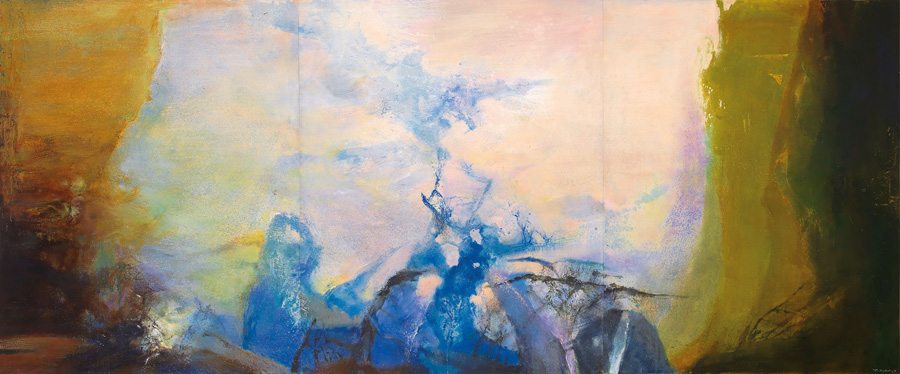
Modern Chinese painting reflects a period where artists explored new forms, techniques, and expressions. This era marked a departure from conventional subjects, introducing abstract and conceptual elements into Chinese art.
Integration of Styles: Artists employed a fusion of techniques, like the traditional gongbi style with impressionistic touches, creating paintings that capture both intricate details and broader emotional narratives.
Cultural Synthesis: This period saw a blending of Chinese philosophical ideas with Western artistic philosophies, resulting in a new visual language that resonated both nationally and internationally.
Market and Auction Highlights
The art market has played a pivotal role in the dissemination and appreciation of modern Chinese painting. Notably, Chinese artworks consistently achieve high sales at auctions, illustrating their global appeal.
Art Market Trends: As reported by the Art Basel and UBS Art Market Report, China is among the largest art markets globally, with modern Chinese paintings being significant contributors. Works by artists like Wu Guanzhong and Zao Wou-Ki not only embody the spirit of the modern Chinese painting movement but also achieve significant acclaim and financial value, as seen in high-profile auctions.
Educational and Cultural Impact
The legacy of modern Chinese painting extends beyond visual art into educational and cultural domains. Art institutions in China, like the Xu Beihong Memorial Museum, continue to celebrate these pioneering artists, offering exhibitions and educational programs that highlight their contributions.
Exhibitions: Exhibitions across China and internationally showcase the evolution and influence of modern Chinese painting. These exhibitions are crucial in educating the public and sustaining an appreciation for this pivotal period in art history.
Academic Influence: The principles and techniques developed during this era are embedded in the curriculum of Chinese art schools, ensuring that future generations continue to learn from and build upon this rich heritage. Article reference1. Ink impressions. chinadaily.com.cn. 20212. Old is new again at Beijing art museum. chinadaily.com.cn. 20203. Year-ender: 10 Chinese artworks fetching over 100m yuan in 2019. chinadaily.com.cn. 20194. Masterpieces of Xu Beihong on display in renovated memorial hall. chinadaily.com.cn. 2019Photo Gallery(1 picture)CategoriesArtsTagChinese PaintingRelatedCentral Academy of Fine ArtsJiang ZhaoheZhao DajunGames & QuizzesThe Four Gentlemen of FlowersCatalogue1. Overview2. Historical Context3. Key Figures and Styles4. Artistic Evolution and Influence5. Market and Auction Highlights6. Educational and Cultural Impact- - - []








